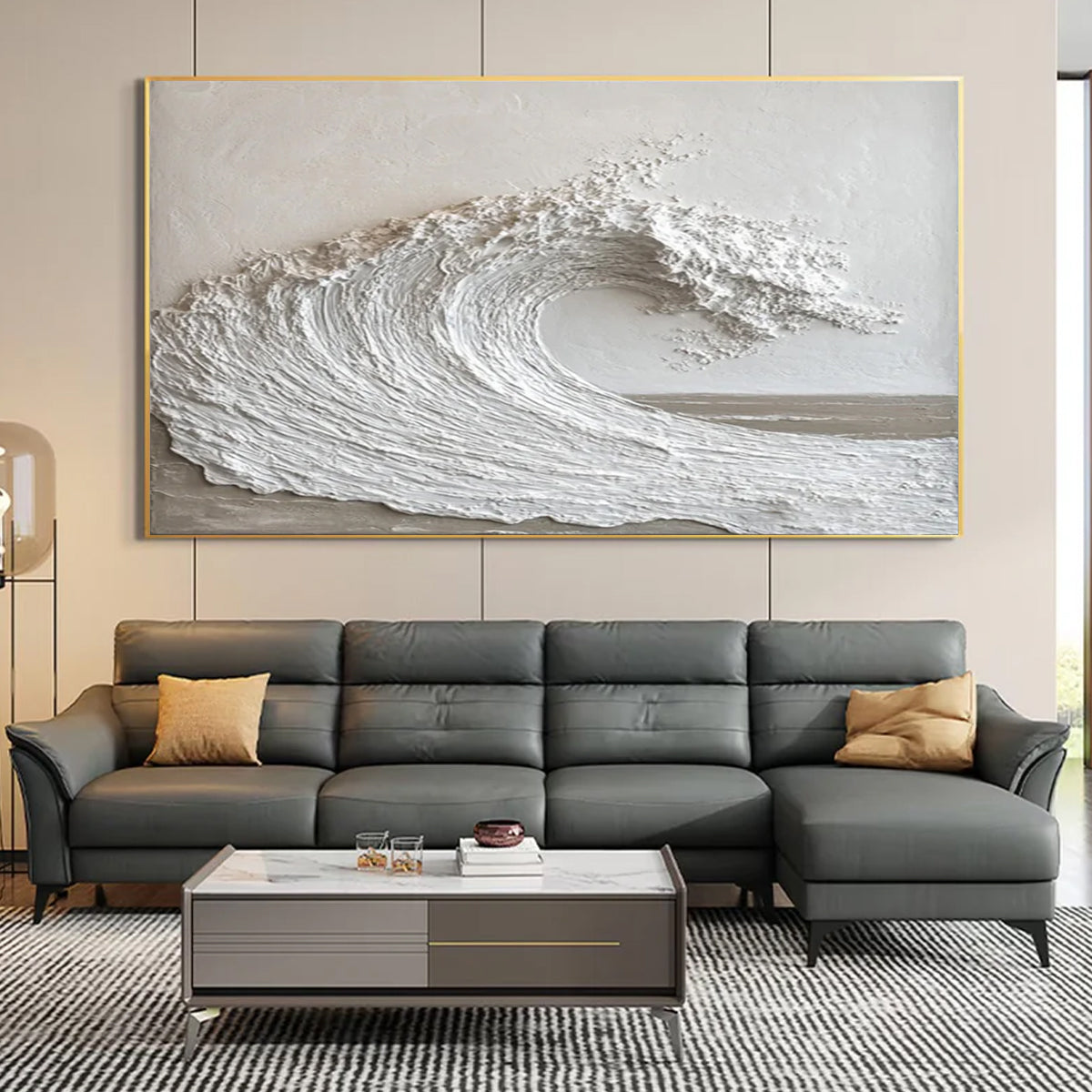
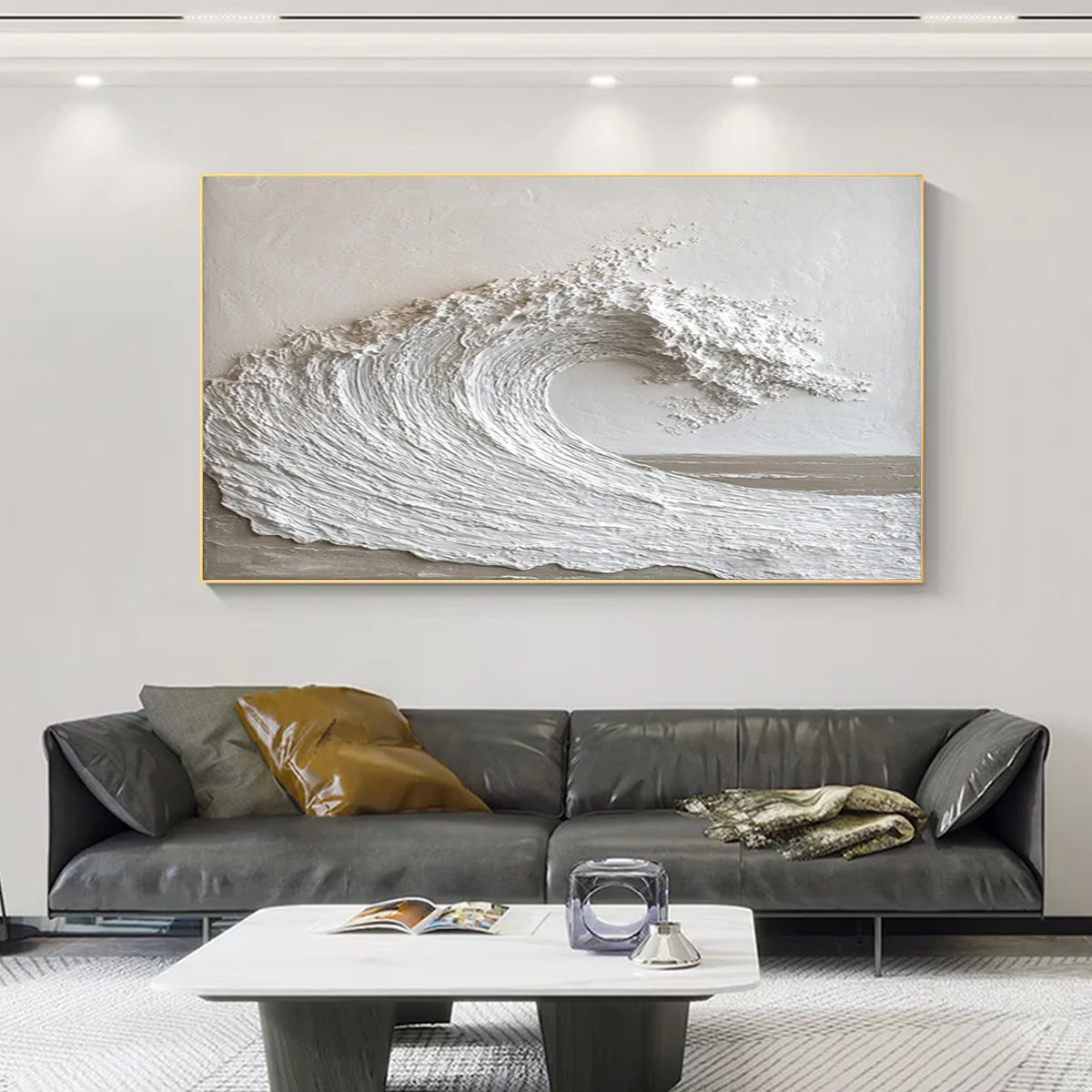
Ocean-themed oil painting wall decoration, hand-painted abstract artwork OP#009

Symphony of colors on the color palette
The pigments squeezed onto the wooden palette resemble unorganized musical notes, with cobalt blue adjacent to ochre and lemon yellow accents. The paintbrush and palette knife await instructions, and a creation about color is about to begin
The power and breath between strokes
The brush walks on the canvas, either quickly or slowly, with thick pigments piling up the texture and light strokes outlining the contours. Each stroke is a manifestation of the artist's emotions, gradually giving the canvas a breathing of life.


The stacking magic of pigments
The scraper stacks the pigments layer by layer, and the colors collide and merge in the stacking. The thick areas are as three-dimensional as sculptures, and the thin areas are as transparent as light gauze. The beauty of the texture of the oil painting is fully displayed at this moment.
The narrative of light and shadow blending colors
Near completion of the scene, colors quietly transition in the light and shadow, with cool and warm colors intertwined, and light and dark complementing each other. Every subtle stroke tells the story of light and shadow, immersing the viewer in it.


Unfinished poems on the easel
The works on the easel stand quietly, emitting a unique scent of turpentine and color matching oil. The wet pigments shimmer with luster, and traces of color remain on the cloth. This is an unfinished artistic journey, waiting for the final finishing touch.
FAQ
What are the key tips for selecting and preserving oil paintings for home collection?
When selecting artworks, balance adaptability and value. For preservation, focus on "environmental control." For classical decor, opt for realistic landscapes or portraits; modern minimalist styles suit abstract or impressionist pieces. Prioritize original works and avoid mass-produced decorative paintings. Beginners should start with smaller pieces around 50×70cm for better results. For storage, keep them away from direct sunlight and humid environments like kitchens or bathrooms, maintaining temperatures between 18-24°C and humidity levels at 40%-60%. Hanging doesn’t require glass covers; regularly use a soft brush to remove dust. For long-term storage, ensure the canvas is completely dry, roll it inward, and wrap it in moisture-proof paper to prevent crushing or deformation.
What is the unique charm of oil painting compared to other painting styles?
The charm of oil painting lies in its "material properties" and "artistic expression". Firstly, the pigment is mixed with vegetable oil and can maintain its luster for a long time after drying. It has strong covering power and can be repeatedly stacked and modified. Rembrandt's portraits often have more than ten layers painted to shape the texture. Secondly, it can present rich textures, and can be created with a paintbrush, scraper, or even fingers. Techniques such as thick coating, thin coating, and cover dyeing can create a contrast between reality and illusion. Finally, it carries profound cultural value, from realistic works of the Renaissance to modern abstract creations, each genre records the ideas of the times, serving as both an artwork and a carrier of historical culture.
What themes and tools should beginners start with when entering oil painting?
Beginners should start with "lightweight" when entering oil painting, first practicing the basics and then expanding the scope. You don't need to buy a complete set of tools, the core includes oil paint (basic color scheme is sufficient), canvas (or oil painting paper), paintbrush, color knife, turpentine and color oil. The theme starts with simple still life, such as an apple or a piece of cloth, using a 10 × 15cm small color sketch to practice color relationships, and a 20 × 20cm frame to practice brushstrokes; You can first use a mature brown and pine knot oil painting with a monochromatic light and dark structure, confirm the shape, and then color it. Don't challenge large paintings or complex scenes right away. Repetitive practice is key, just like C é zanne painting hundreds of apples to master the core language of oil painting. What themes and tools should we start with?